Hearing Test

A quick, painless, digitally advanced hearing evaluation

Our hearing assessment is designed to understand how well you hear across different volumes and pitches using calibrated digital equipment, guided by experienced audiology professionals.

Complete Assessment Flow

We do more than test hearing — we listen, understand, and guide

Every evaluation begins with understanding your hearing concerns, your daily listening environment, and the support you may need. From ear examination to advanced hearing tests and hearing aid guidance, each step is carefully explained and personalized.

Digitally advanced assessmentExperienced audiology professionalsClear next-step guidance
What happens in a hearing test?

Step-by-step hearing assessment process

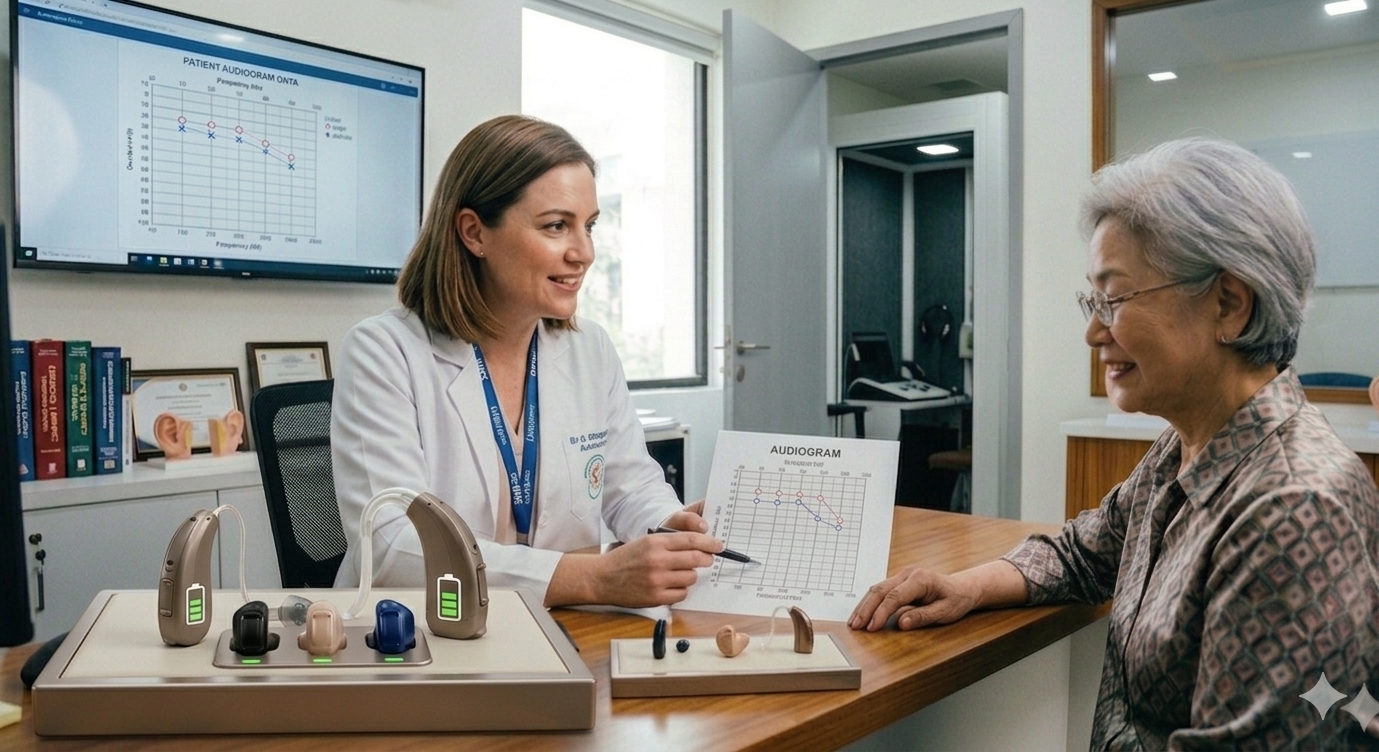
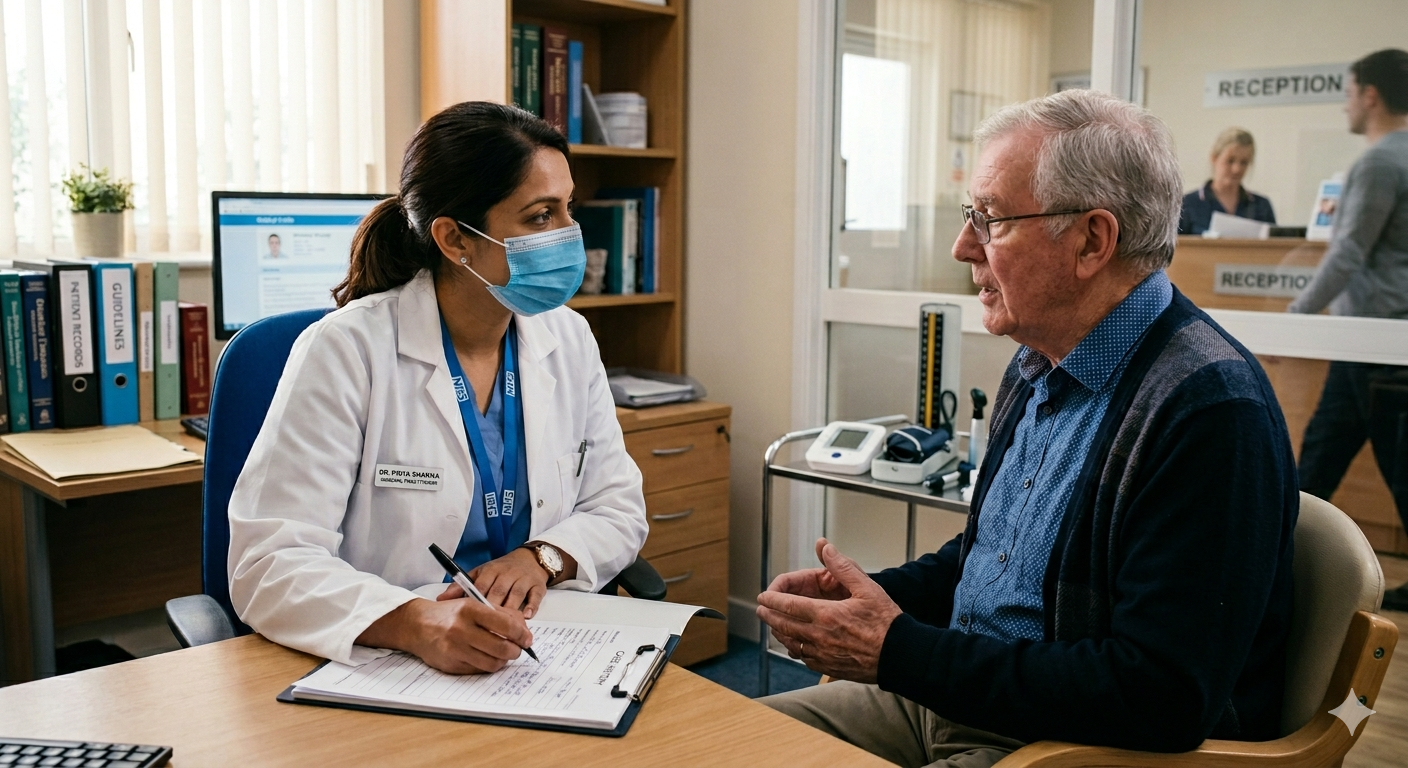
Audiologist discussing hearing concerns with a patient
01

Consultation & Hearing Health Check

Your consultation begins with a quick case history to understand your ear and hearing concerns, lifestyle, and daily listening environment.

What is case history? It is the process of collecting information about your hearing challenges, symptoms, and routine so we can provide the right solution, not just a generic recommendation.

We do not just hear, we listen, and then we provide the right solution.
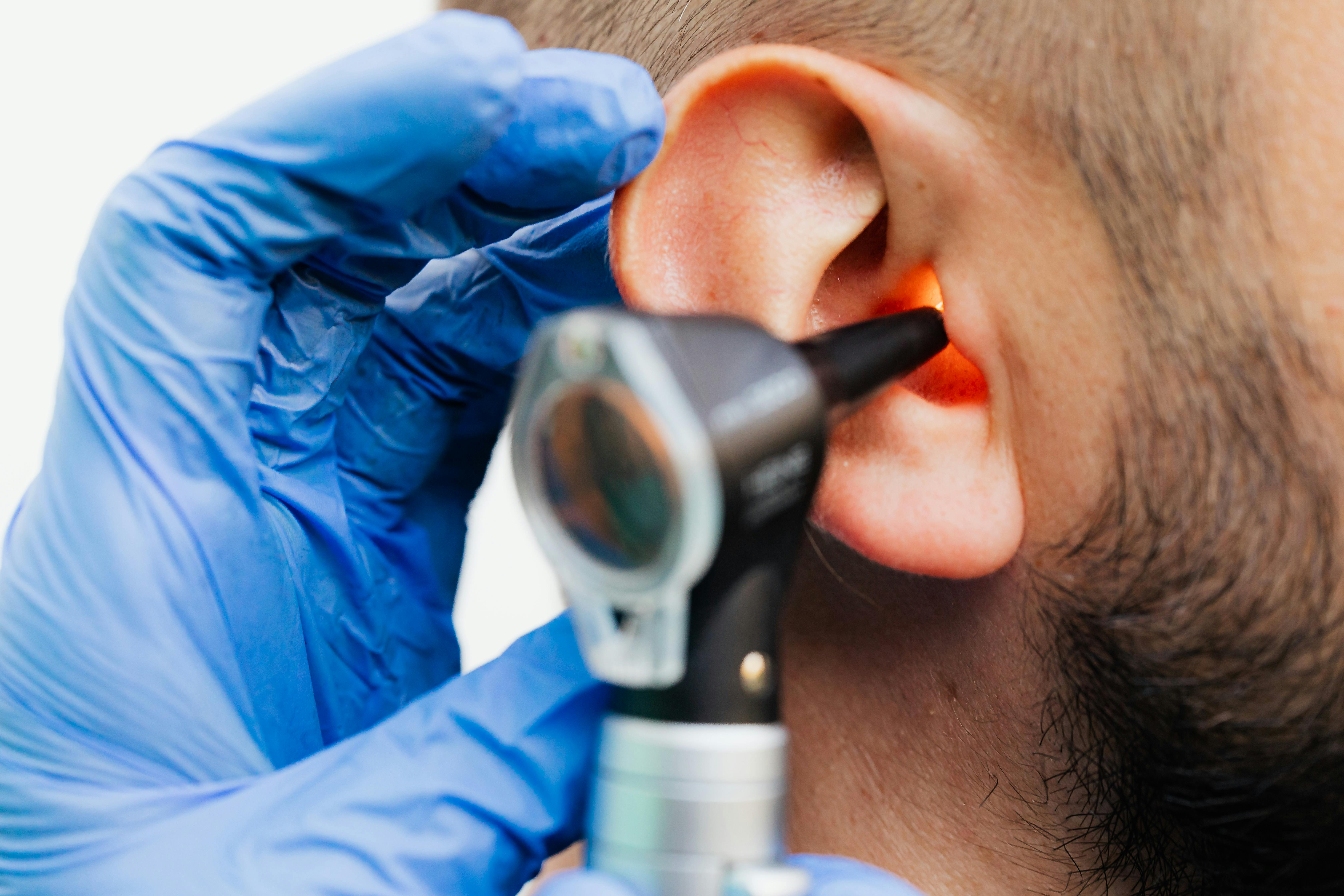
Audiologist examining a patient ear using an otoscope
02

Otoscopy Examination

A small lighted instrument is used to examine the ear canal and eardrum. This helps identify ear wax, ear discharge, and the presence or absence of a perforated eardrum.

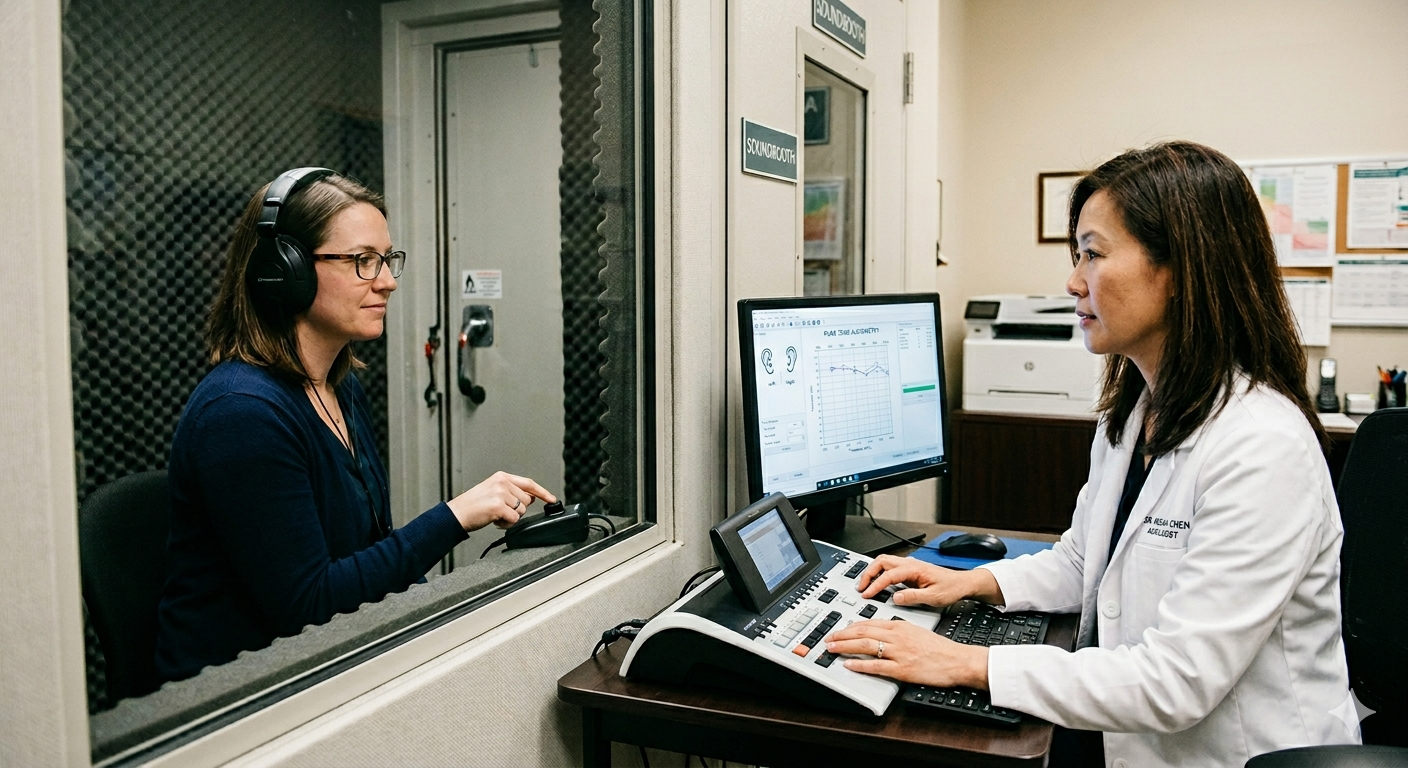
Patient wearing headphones during a pure tone audiometry hearing test
03

Pure Tone Audiometry (PTA)

This is a precision hearing test. While wearing comfortable headphones, you will listen to a series of beeps or tones at different frequencies and decibel levels.

Each time you hear a sound, even a very faint one, you will press a button or raise your hand.

  • Identifies hearing loss: hearing is generally considered normal between -10 dB and 15 dB. A PTA result above 15 dB may indicate hearing loss.
  • Measures severity: the degree of hearing loss is commonly estimated using average thresholds around speech frequencies such as 500, 1000, and 1500 Hz.
PTA dB HLDegree of lossClinical note
≤ 15Normal hearingHearing is within normal range.
16–25Slight hearing lossMild difficulty in softer listening situations.
26–40Mild hearing lossA hearing device may be helpful.
41–55Moderate hearing lossUsually requires a hearing aid.
56–70Moderately severeStrongly recommended to use a hearing aid.
71–90Severe hearing lossHearing aids can still provide meaningful benefit.
> 90Profound hearing lossBenefit depends on onset and condition; devices may help, though not always completely.
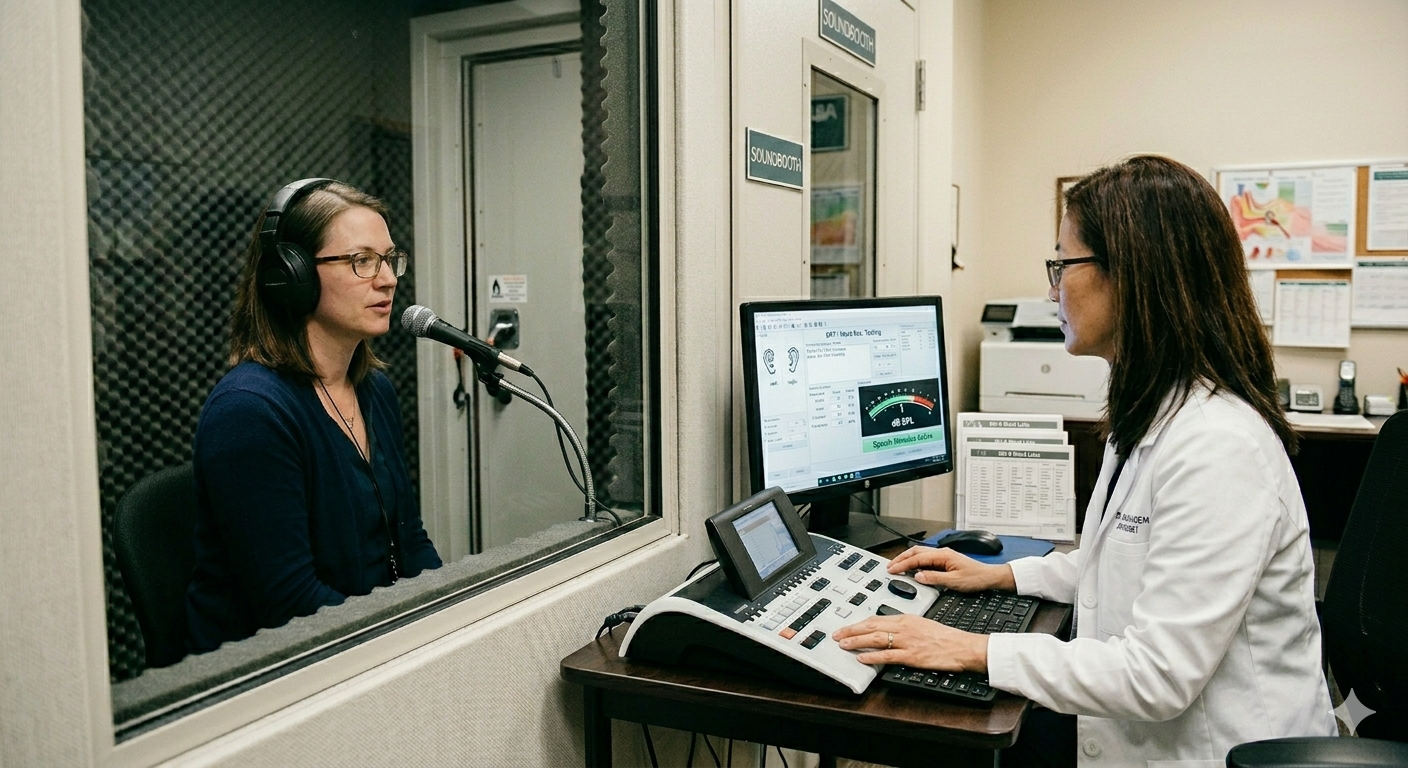
Speech audiometry and speech in noise test setup
04

Speech Audiometry

This test evaluates how clearly you hear and understand speech. It helps us assess real-world listening ability beyond pure tones and supports more accurate hearing aid recommendations.

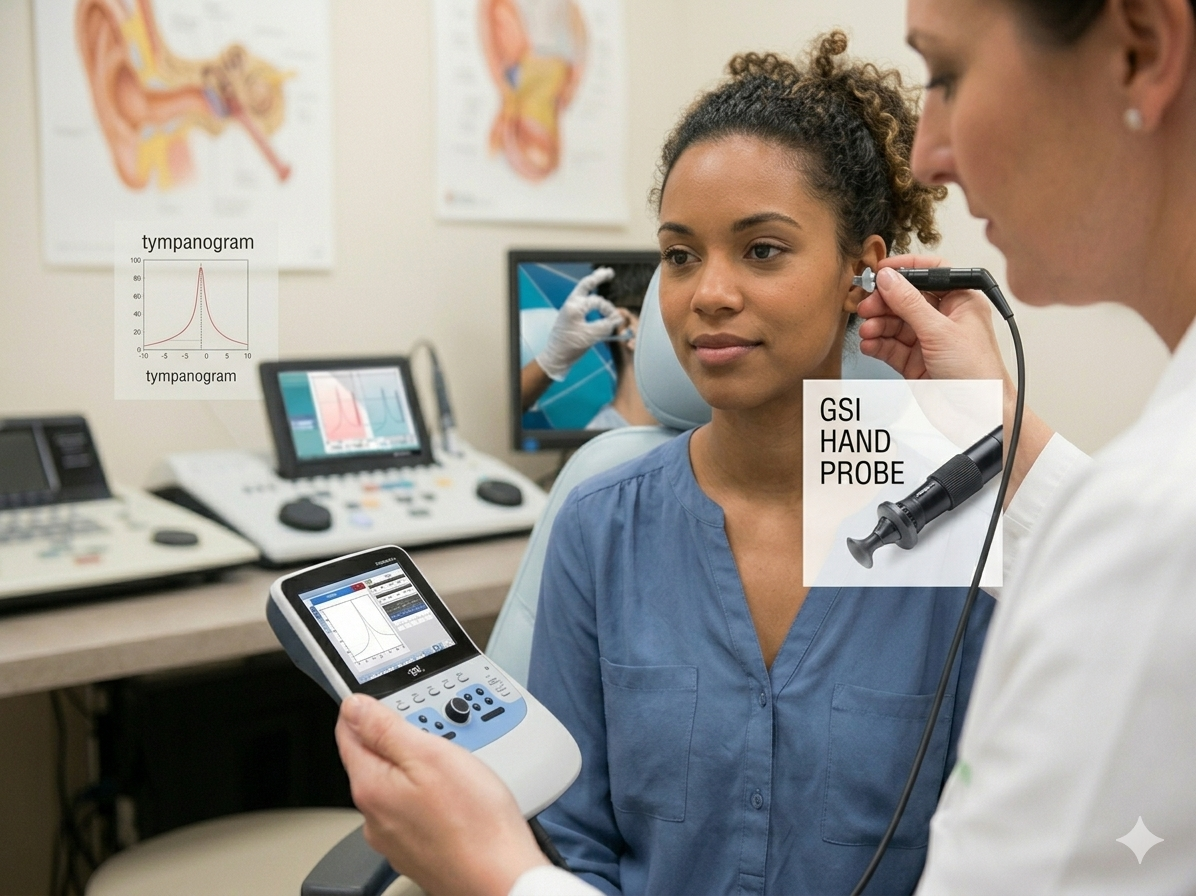
Middle ear pressure and tympanometry style hearing assessment
05

Immittance Audiometry (IA)

Immittance testing evaluates middle ear function and helps detect conditions related to the eardrum, ear pressure, and sound conduction through the middle ear system.

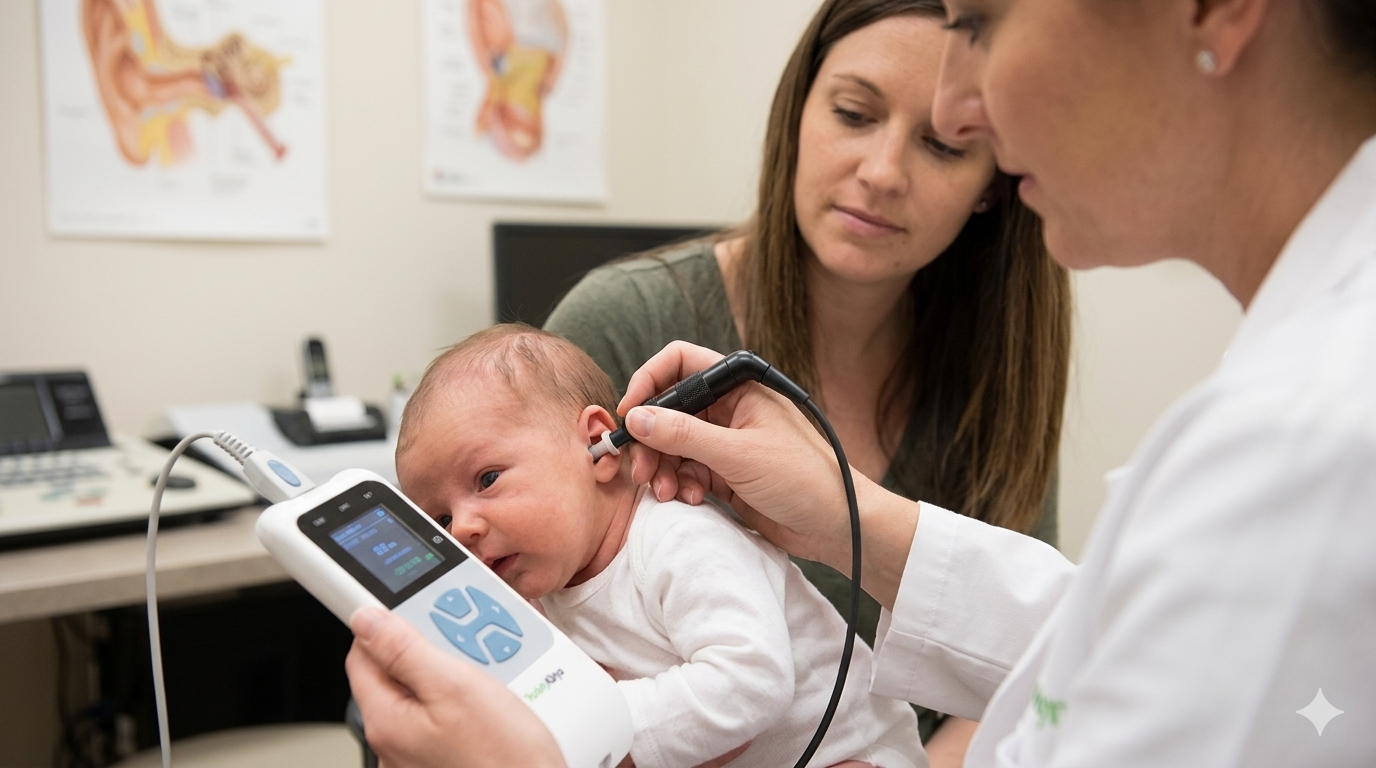
Objective inner ear assessment during OAE test
06

Oto-Acoustic Emission (OAE)

OAE testing helps assess inner ear function, especially the response of the cochlea. It is quick, objective, and useful in identifying hearing issues with precision.

Audiologist counselling patient about hearing aid options
07

Counselling & Hearing Aid Selection

Based on your results, we explain your hearing condition clearly and help you choose the most suitable hearing aid according to your hearing loss, lifestyle, comfort, and budget.

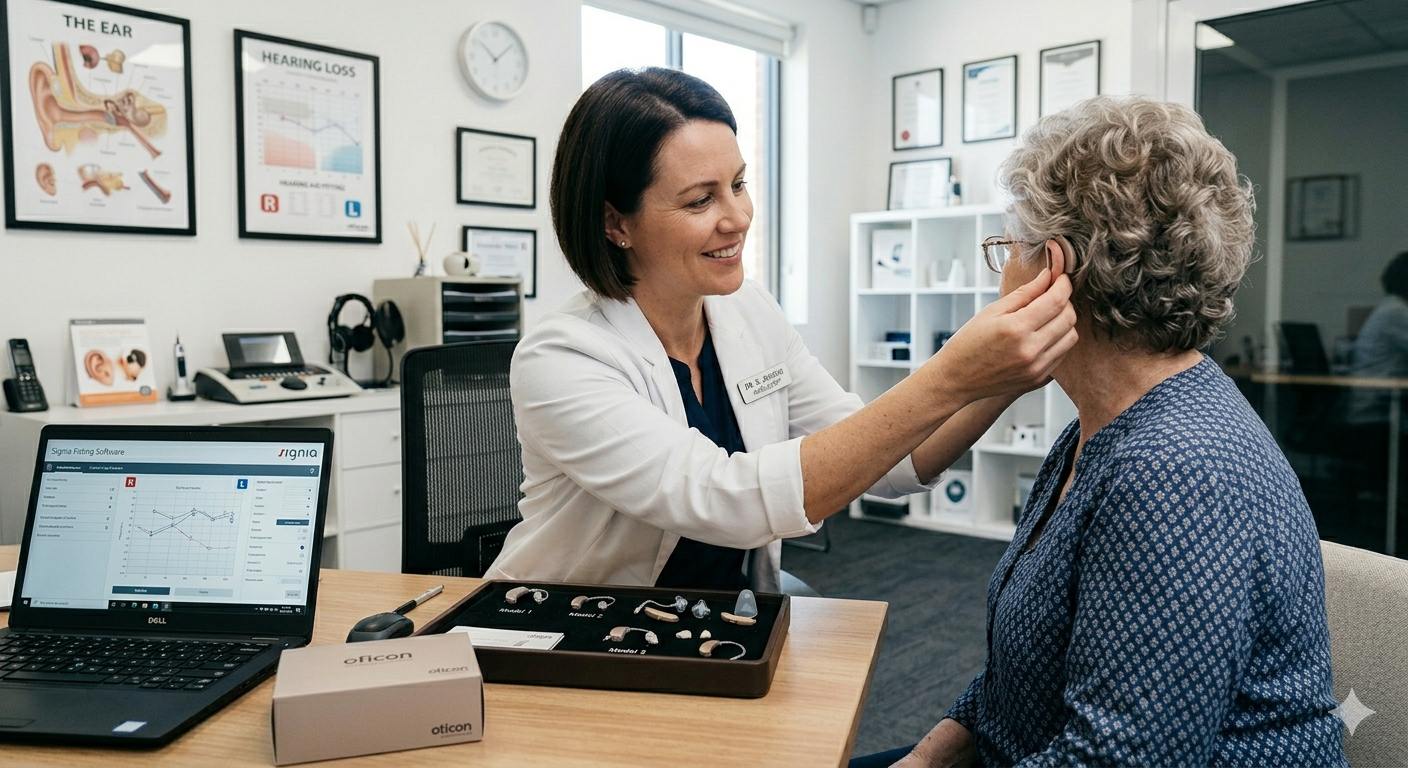
Audiologist fitting hearing aid for a patient
08

Hearing Aid(HA) Trail

Once the device is selected based on considering all the factors that particular device trail will be given by calibrating , programing and syncing to your individual hearing levels, to make your hear the best even having a hearing loss , HA trail will be shown based on what features that particular hearing aid contain. You will be experiencing the best hearing in ​

  • Quiet environment
  • Group conversations
  • Watching Tv & listening music through bluetooth.
  • taking you to real environment outside the clinic , busy area.

Note : All these depends upon the hearing aid that we select. ​

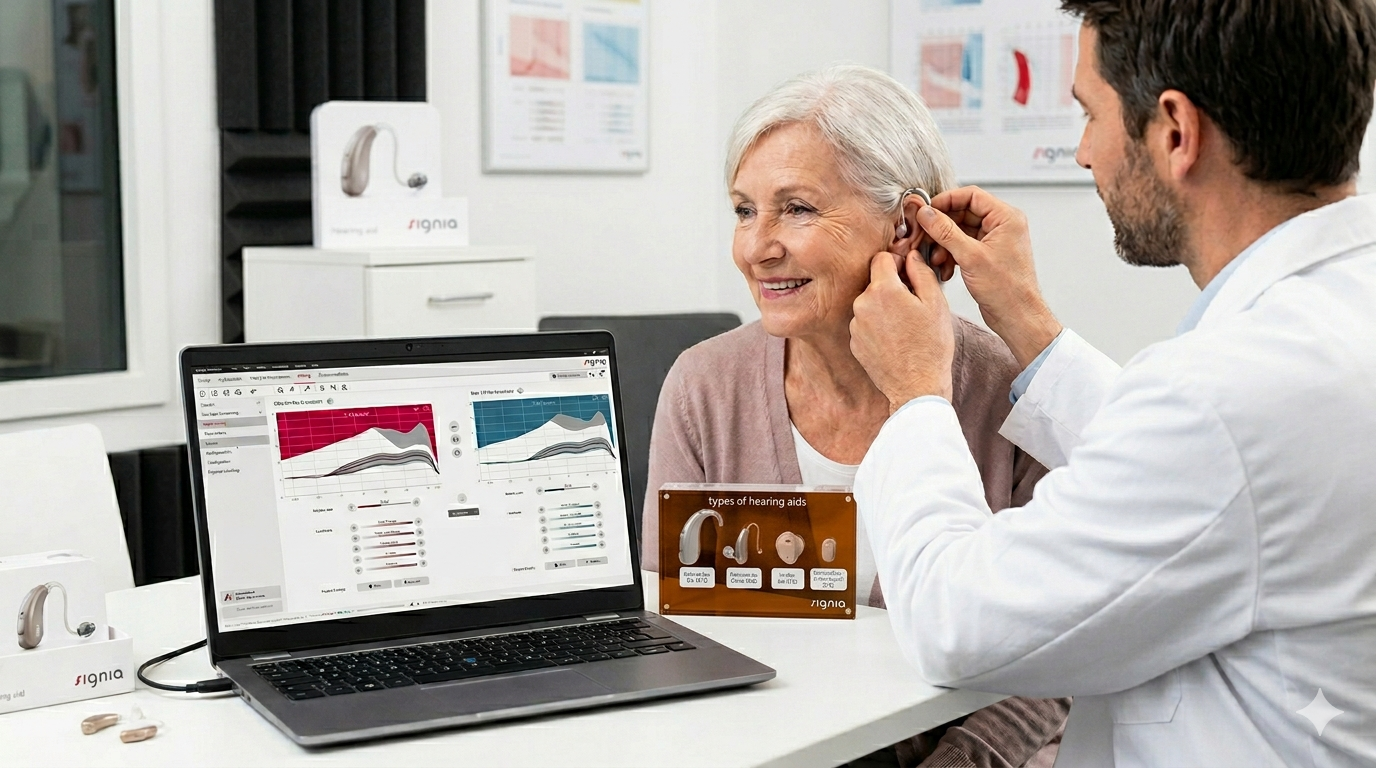
Audiologist fitting hearing aid for a patient
09

Hearing Aid Fitting & Troubleshooting

We support you with proper hearing aid fitting, adjustments, and practical troubleshooting so you can use your device comfortably and confidently in everyday life.

Take the next step

Book your hearing assessment with confidence

From diagnosis to hearing aid support, our team is here to guide you at every step with care, clarity, and the right solution.